
A Guide Explaining What Does Pu Erh Tea Taste Like?
Introduction to Pu Erh Tea
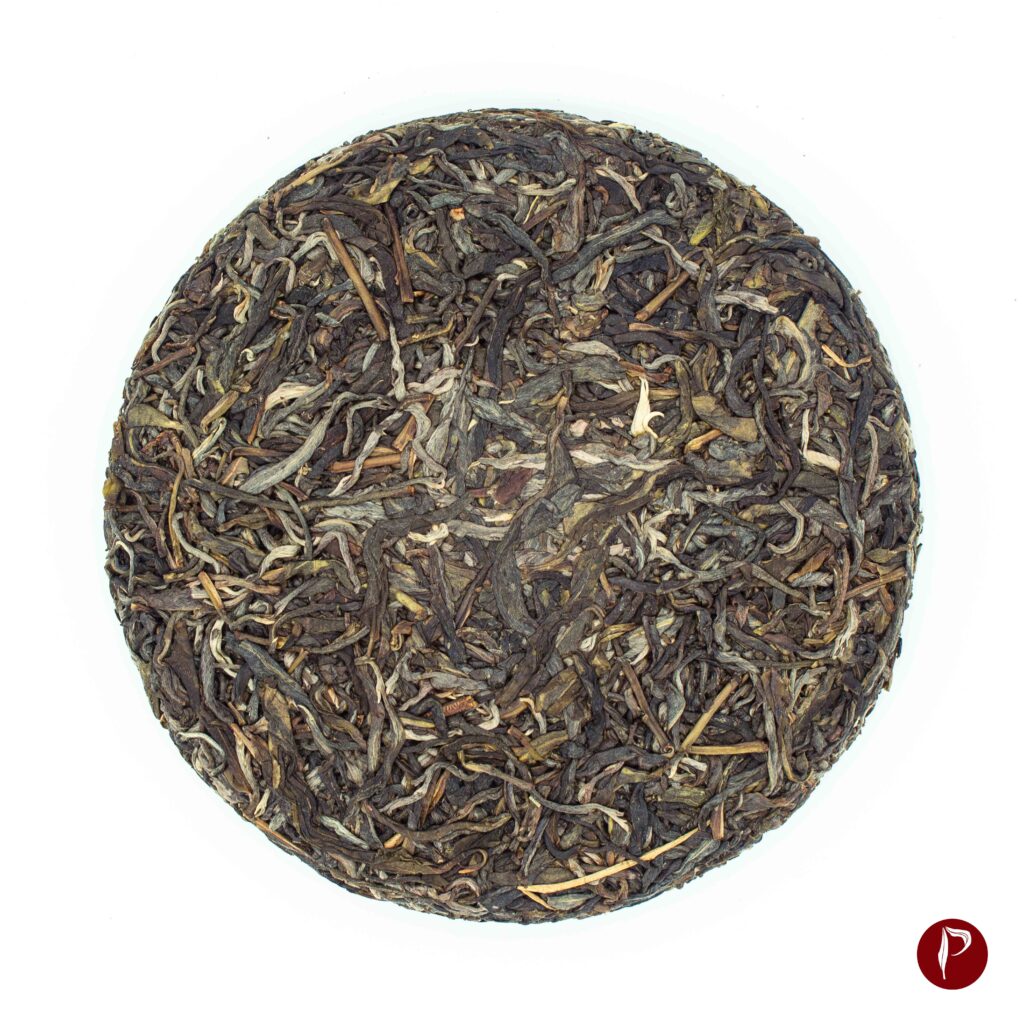
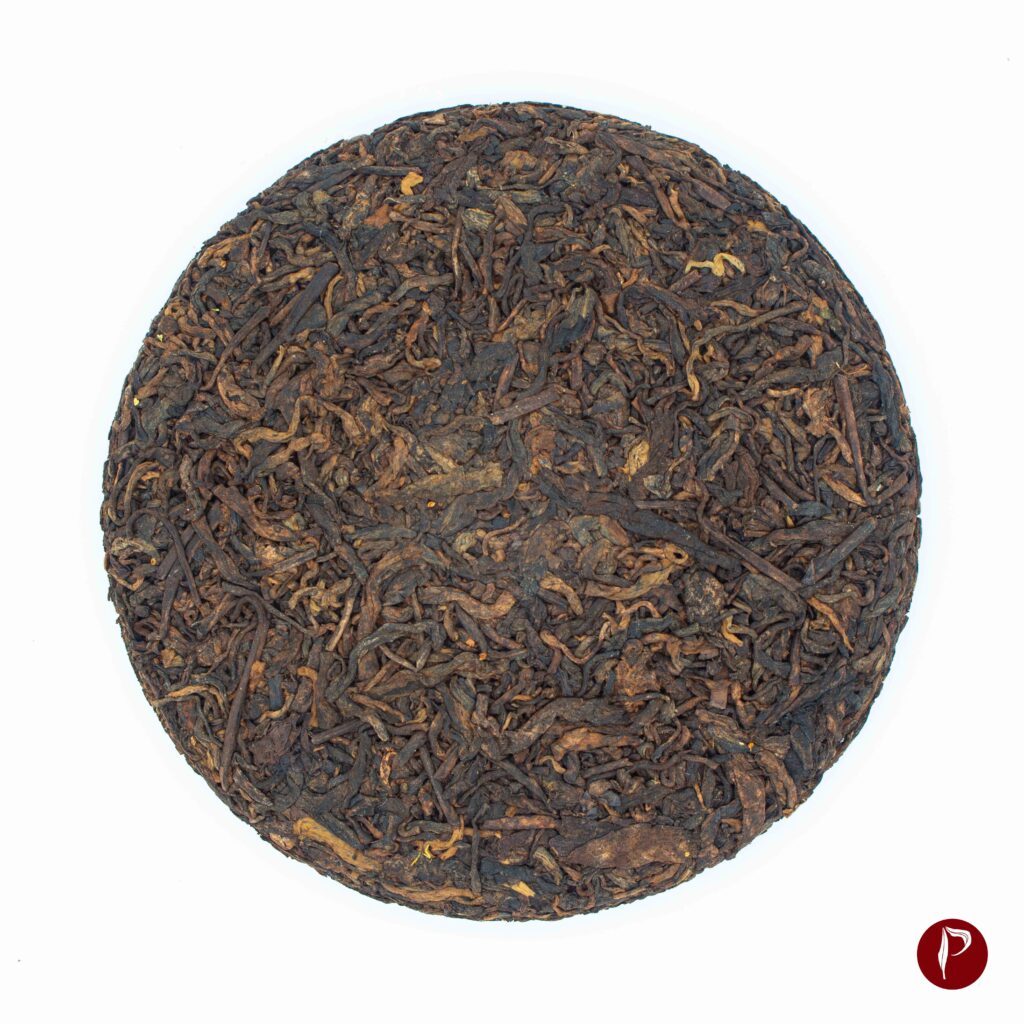
Let me share with you the fascinating world of pu erh tea, a treasure that comes exclusively from China’s Yunnan Province. By law, only tea produced in the Pu’er region can bear this distinguished name. What makes pu erh truly special is how it evolves with age, much like a fine wine. This article will explore the key factors that go into the core question, what does pu erh tea taste like?
There are two types of pu erh tea that offer completely different experiences: raw pu erh (sheng puer), the traditional form that ages naturally, and ripe pu erh (shou puer), which undergoes an accelerated fermentation process developed in the 1970s. After tasting hundreds of pu erh teas, I can attest that each one tells its own story through flavors that vary by age, storage conditions, altitude, tea tree age, and even the specific mountain where the tea trees grow.
To learn more details read: What are the Differences Between Pu Erh Raw vs Ripe?
Raw Pu Erh: A Living Tea That Transforms Over Time
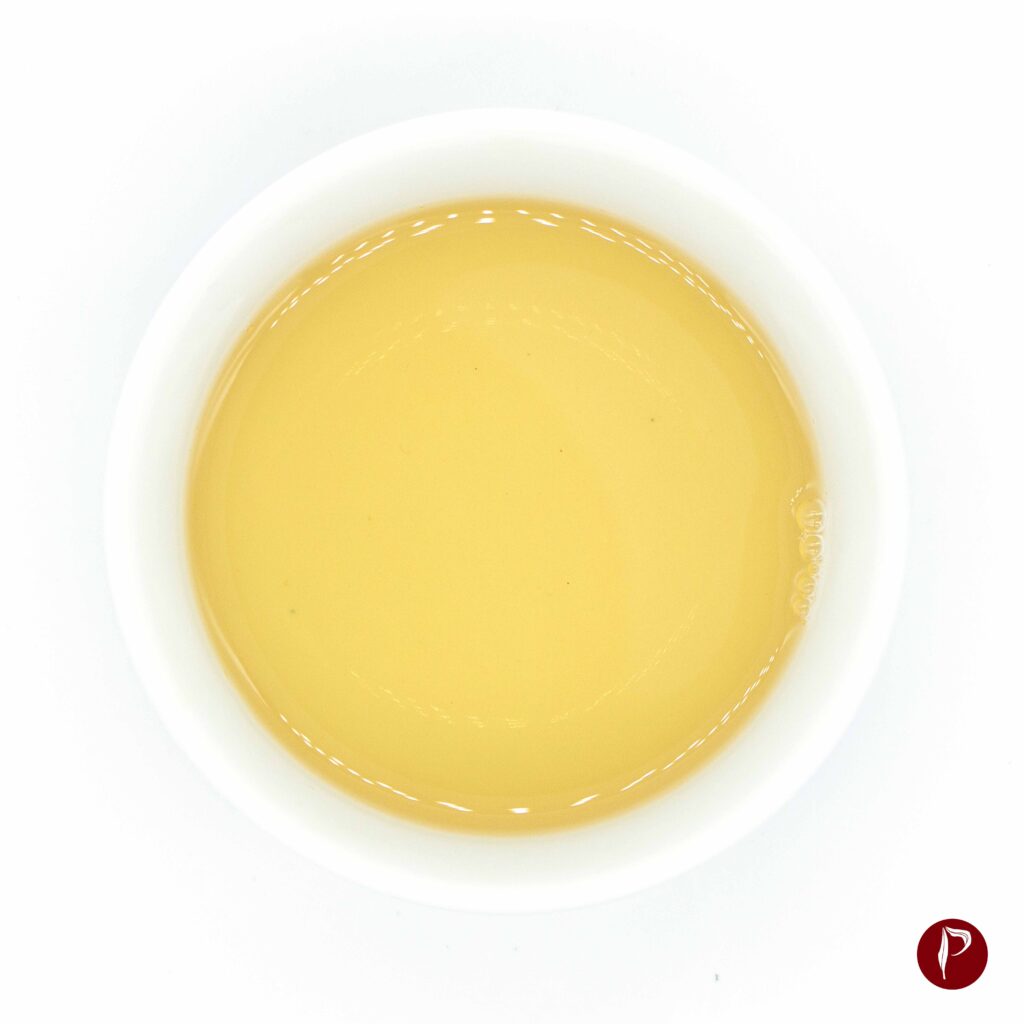
So, what does pu erh tea taste like? Let’s start with raw pu erh, my personal favorite after many years of drinking Chinese tea. The taste depends heavily on its age. Young raw pu erh (1-5 years old) greets the unaccustomed tea drinker with a vibrant character reminiscent of a complex green tea.
The initial impression is fresh and grassy with hints of cedar, pine or moss, like walking through a spring meadow, often accompanied by delicate floral notes – our Jingmai Mountain pu erh is particularly known for its distinct orchid aroma. There’s a slight but pleasant after taste that transforms into sweetness, leaving a honey-like aftertaste that lingers beautifully. On the palate one may notice a peach or apricot note. The mouthfeel is crisp and energizing, often with a cooling sensation in the throat that connoisseurs call “liang gan.” To recap the flavors of young raw pu erh consist of:
- Fresh and grassy
- Floral notes – Especially in high mountain teas (our Jingmai Mountain pu erh has a distinct orchid aroma)
- Mild honey after taste – Similar to a brisk green tea, but good quality ones transform this into sweetness, with hints of stonepit fruit
As raw pu erh matures beyond ten years, it undergoes a remarkable transformation and changes the the characteristics of the question what does pu erh tea taste like. The once-bright flavors deepen into earthy, woody notes that evoke an ancient forest, often with layers of dried fruit sweetness. Some develop fascinating medicinal complexities reminiscent of ginseng or rare herbs.
Each sip of aged raw pu erh becomes an experience that lingers for minutes, revealing new dimensions with every tasting. Common flavors of mature raw pu erh include:
- Earthy and woody – Like an ancient forest
- Dried fruit sweetness- dates and raisins
- Medicinal complexity – Some develop ginseng or herbal notes
- Deep honey aroma – The sweetness becomes richer and more layered
Ripe Pu Erh: Instant Depth and Comfort
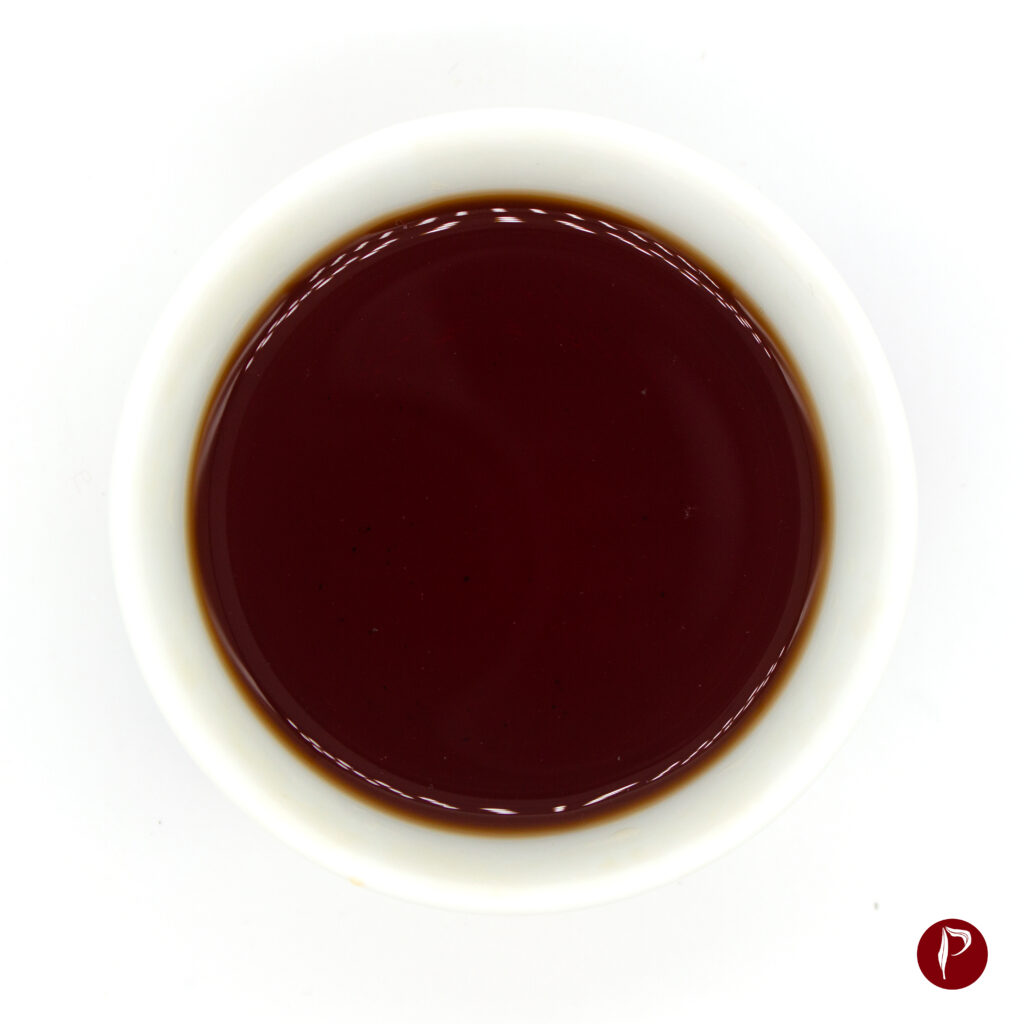
Beginners ask me, “what does pu erh tea taste like?” When asked about ripe puerh, I’d say it offers immediate satisfaction with its smooth, approachable character. A well-made version presents rich earthiness that might remind you of a damp forest floor or fresh woodiness (in the most appealing way possible), balanced by sweet undertones often compared to dates, plums or brown sugar. Higher quality examples reveal nutty or chocolatey notes that add wonderful complexity. What’s most important is that the fermentation should taste clean – any fishy or off-putting odors indicate poor processing.
Because of its richness and sweetness, I frequently recommend ripe pu erh to beginners because it’s so forgiving to brew and consistently enjoyable. The flavors remain stable yet comforting, like your favorite cup of tea.
What does pu erh tea taste like? In summation a well-made ripe pu erh should have:
- Rich earthiness – Like damp forest floor or fresh compost (in a good
way!) - Sweet undertones – Often compared to dates or brown sugar
- Nutty/chocolatey notes – Especially in higher quality teas
- Clean fermentation – No fishy or off-putting odors
While ripe pu erh doesn’t evolve as dramatically as raw, it does improve with time:
- Earthiness softens – Becomes more like cedar wood than damp soil
- Increased sweetness – Develops honey-like creamy notes
- Smoother texture – Feels thick and viscous in the mouth, transitioning to a silky smooth texture.
Raw vs. Ripe Pu Erh: Understanding the Differences in Taste
Here’s a detailed comparison to help you understand these two styles and what does pu erh tea taste like:
Characteristic | Raw Pu Erh (Sheng) | Ripe Pu Erh (Shou) |
Young Taste | Fresh, floral, sometimes bitter | Earthy, smooth, lacks depth and complexity |
Aged Taste | Woody, eucalyptus, honeyed, stone-pit fruit | Mellow earthiness, dried fruit, complex |
Mouthfeel | slightly punchy, bright, and refreshing | Consistently thick, viscous, becomes smooth |
Caffeine | Generally high in caffeine | Slightly lower on the scale of Chinese teas |
The Fascinating Science Behind Pu Erh's Unique Taste
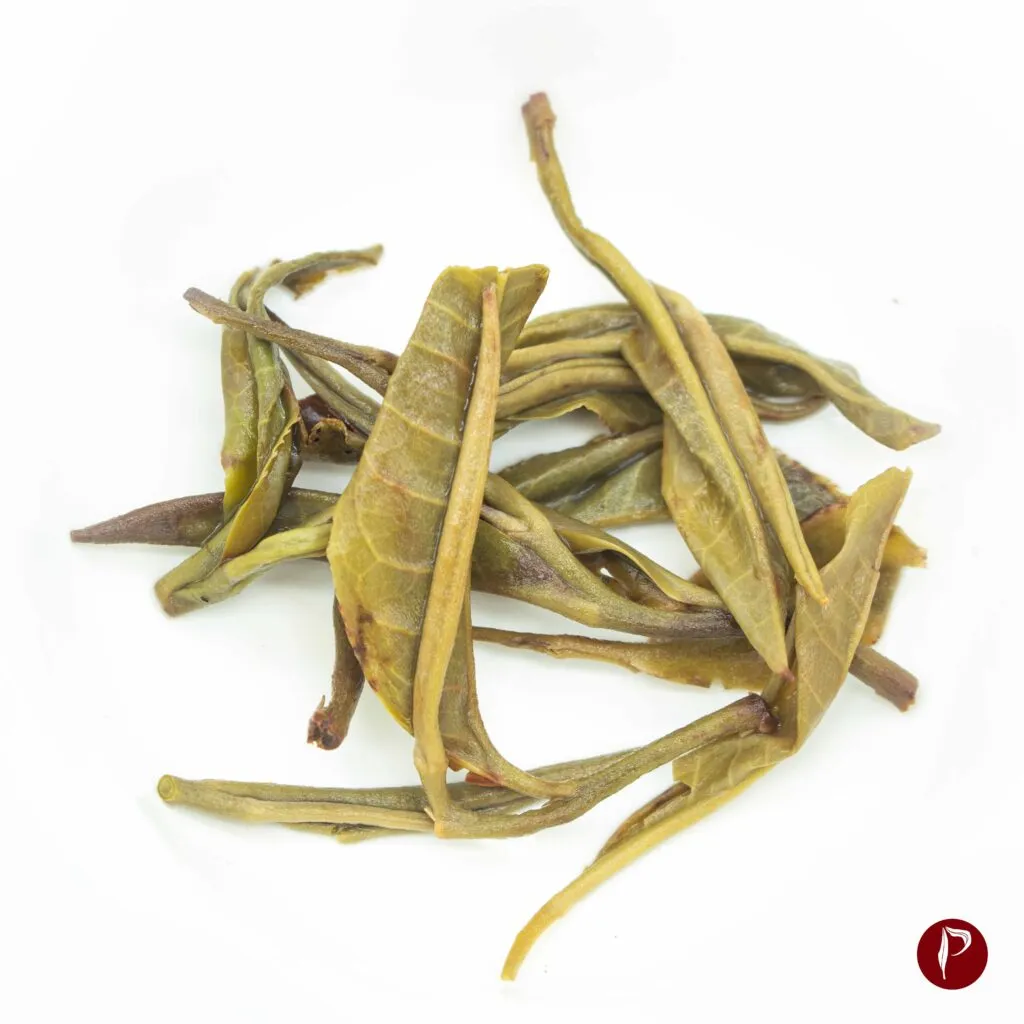
An interesting explanation to the question, what does pu erh tea taste like is the science of smell. Research from Yale School of Medicine confirms what tea drinkers have long known, our sense of smell dramatically influences flavor perception. Their studies show that up to 80% of what we perceive as taste actually comes from aroma. Dental One Associates explains how taste and smell work together to create flavor perception. To summarize smell (olfaction) occurs when odor molecules bind to olfactory receptors in the nasal cavity. This explains why properly appreciating pu erh involves inhaling its fragrance before sipping, and why the empty tea cup often reveals hidden flavor notes after drinking.
The complex flavors of pu erh tea stem from several fascinating factors. First, the microbial activity during fermentation creates hundreds of new compounds, which is why aged pu erh develops flavors completely absent in fresh leaves. Just like fine wine, terroir plays a crucial role – pu erh from different mountains boasts distinct characteristics. Blang teas tend to be strong and powerful initially but transform into remarkable sweetness.
How Elevation & Tea Tree Types Affect Pu Erh's Taste
When evaluating the question ‘what does pu erh tea taste like’, it is of the utmost importance to gauge the tea by it’s altitude at which the leaves were picked and age of the tea tree. Older trees have deeper roots, absorbing unique minerals and retains a more nuanced taste. Younger trees lack this complexity; retaining simpler, sometimes rougher flavors.
Here’s why:
1. Pu erh grown at different elevations develops distinct taste profiles:
High-Elevation Pu Erh (1,600m+/5,250ft+)
- Slower growth → More concentrated nutrients → Deeper, complex flavors
- Cooler temps → Thicker leaves → Smoother, less bitter
- Common traits:
- Brighter floral & honey notes (especially in raw pu erh)
- Cooling aftertaste (“liang gan”)
- Longer-lasting sweetness
- Example: Jingmai Mountain pu erh is famous for its orchid aroma due to high-altitude ancient forests.
Low-Elevation Pu Erh (Below 1,000m/3,300ft)
- Faster growth → Less complexity
- Flatter, earthier taste (often used for ripe pu erh)
- Can be harsh if young (more astringency)
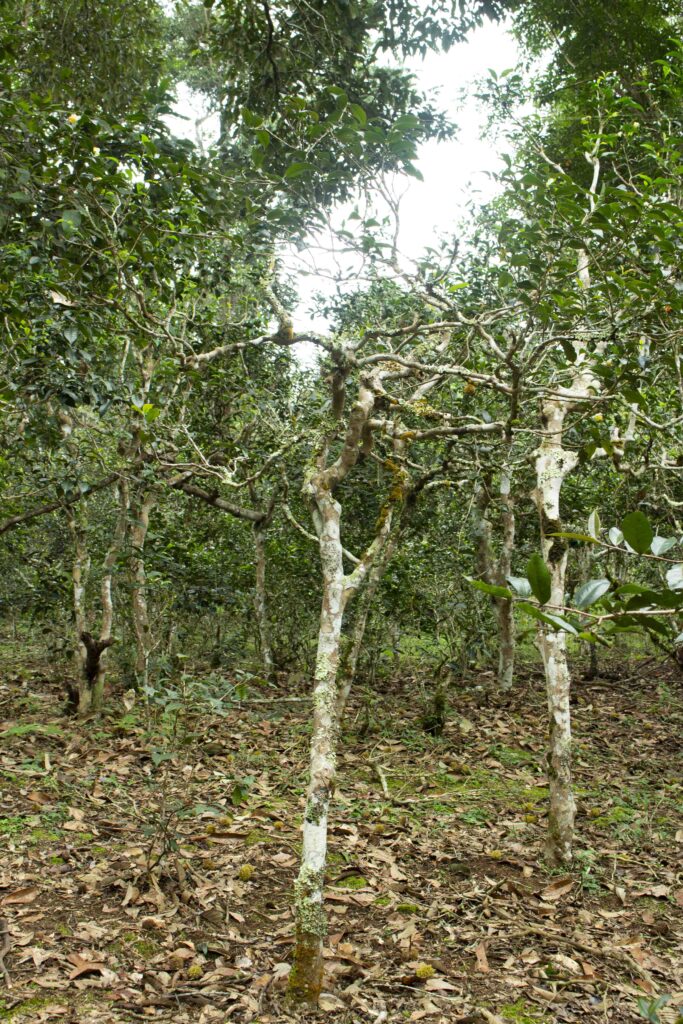
Not all pu erh trees are the same—the age and variety of the tree drastically change the tea’s personality.
Ancient Trees (Gushu) – 300+ Years Old (Purcraftea Leaves)
- Rarest & most prized → Extremely balanced (no single note overpowers)
- Taste profile:
- Raw: Vibrant yet smooth—no harsh bitterness
- Ripe: Silky, deep, with aged fruit notes
Younger trees (20–50 yrs) → Faster growth, less depth
- Taste profile:
- Raw: Sharper, more astringent
- Ripe: Standard earthy, woody flavors that lacks depth (common in factory teas)
- Many budget-friendly ripe pu erhs use plantation leaves.
Embarking on Your Pu Erh Journey
We at Purcraftea encourage you to explore the common asked question: what does pu erh tea taste like. Raw pu erh is more of an acquired taste for some, but easily adaptable for those green tea lovers (though still quite different from many Chinese green teas). Those who are used to really sweet tea brewed from tea bags can get used to the richness, mellowness, complexitty, and sweetness of aged ripe pu erh. You can take our quiz to further explore your tastes and desires.
Pu erh tea offers a lifetime of sensory discovery. Whether you’re drawn to the vibrant energy of young raw pu erh or the comforting depth of aged ripe, there’s a perfect tea waiting to become part of your daily ritual. My advice is to approach pu erh with patience and an open mind. Some of my most memorable tea moments have come from pu erh that initially challenged my expectations but later became cherished favorites. The journey of discovering what does pu erh tea taste like is as rewarding as the destination, with each cup revealing new layers of understanding and appreciation for this remarkable tea.
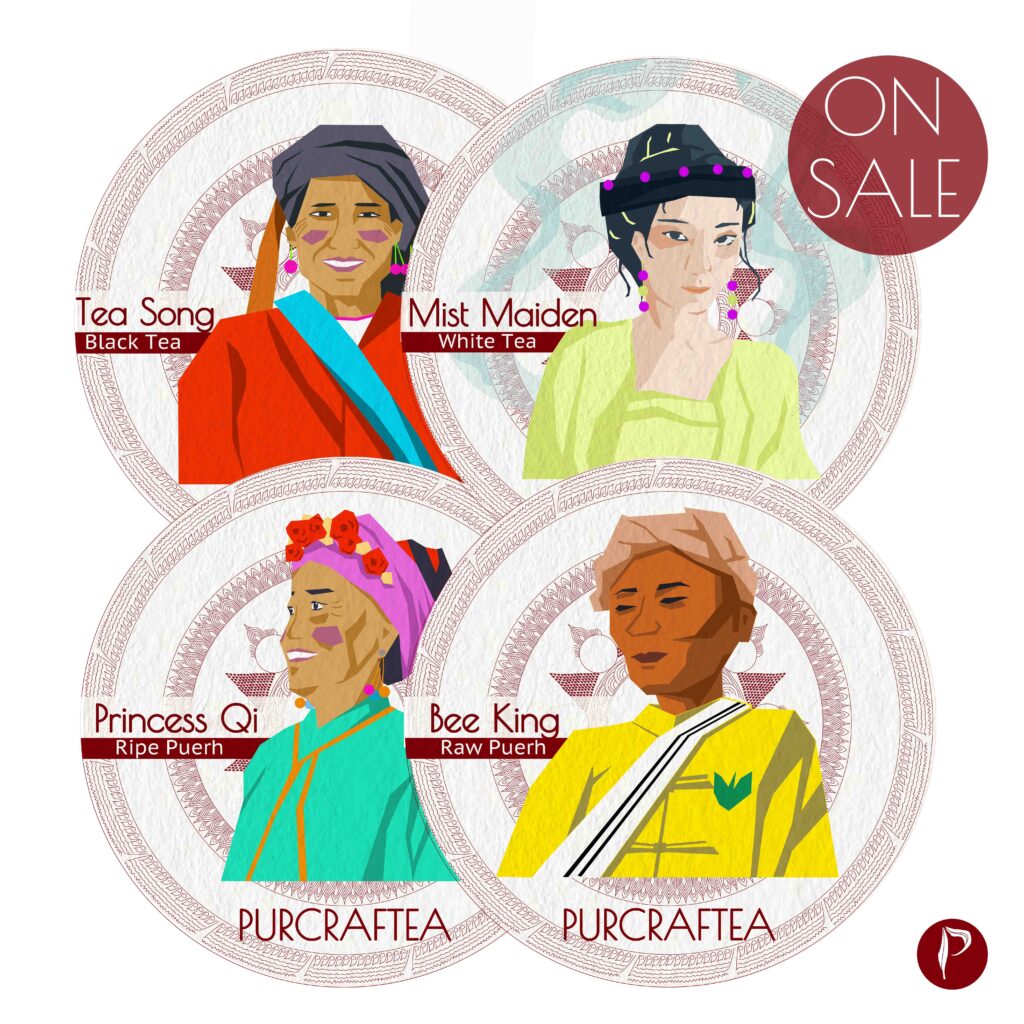
We offer 25 gram samples of ripe, raw pu erh, black and white tea in the shop and larger 200 gram tea cakes which are perfect for long term storage. We are glad you are ready to try your first pu erh teas and urge you to dive deep into it. You’ll not be disappointed and you will develop a lifelong love affair with pu erh tea!
Find out more about the ancient tree here: From Roots to Leaves: Differences Between Ancient Tree Tea, Old and Terrace Tea Tree
About Us
Table of Contents
Toggle