
Our Tea Source
How to Classify Ancient Trees
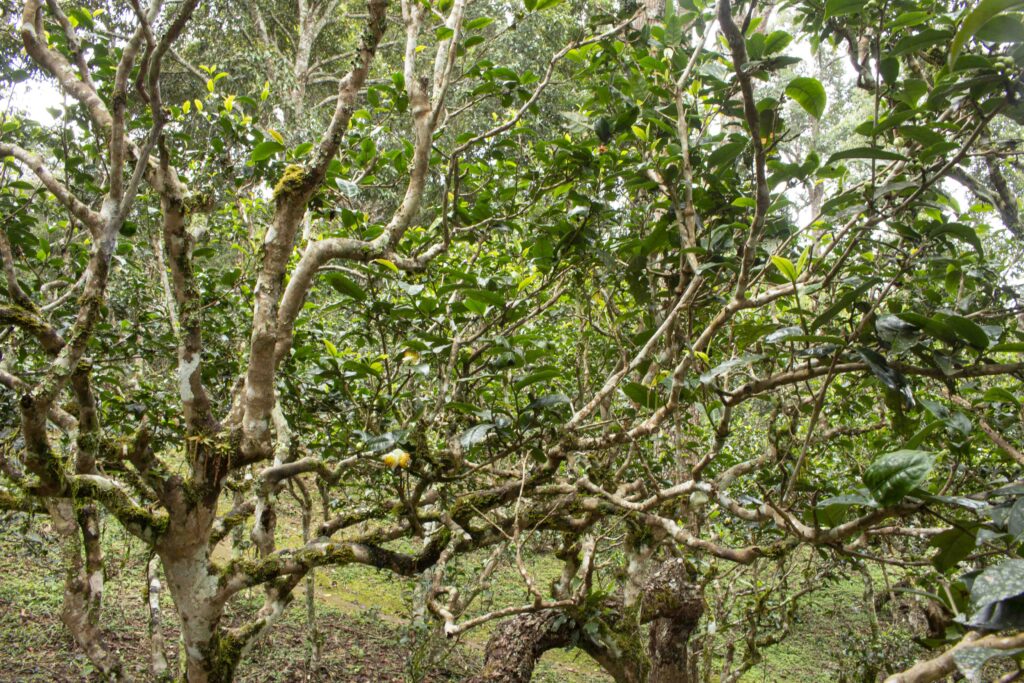
China, with its thousands of years of tea growing history, groups tea based on the age of the tea trees. This leads to three primary categories: ancient trees tea (Gushu Cha古树茶), old tree tea(Dashu Cha大树茶, and terrace tea(Taidi Cha台地茶).
The age of the tea tree will have a big impact on the tea’s flavor, enriching the tea to bring out more complex flavors and sweetness. That is why we choose to only sell tea leaves sourced from ancient trees (200-300 years old) or old trees (about 100 years old).
Our ancient trees are found on Aileng Peak Jingmai Mountain with an altitude of 1600m (5249 feet) near Manghong Village. This village is known for sweeter teas because of its proximity near the top of Jingmai Mountain.
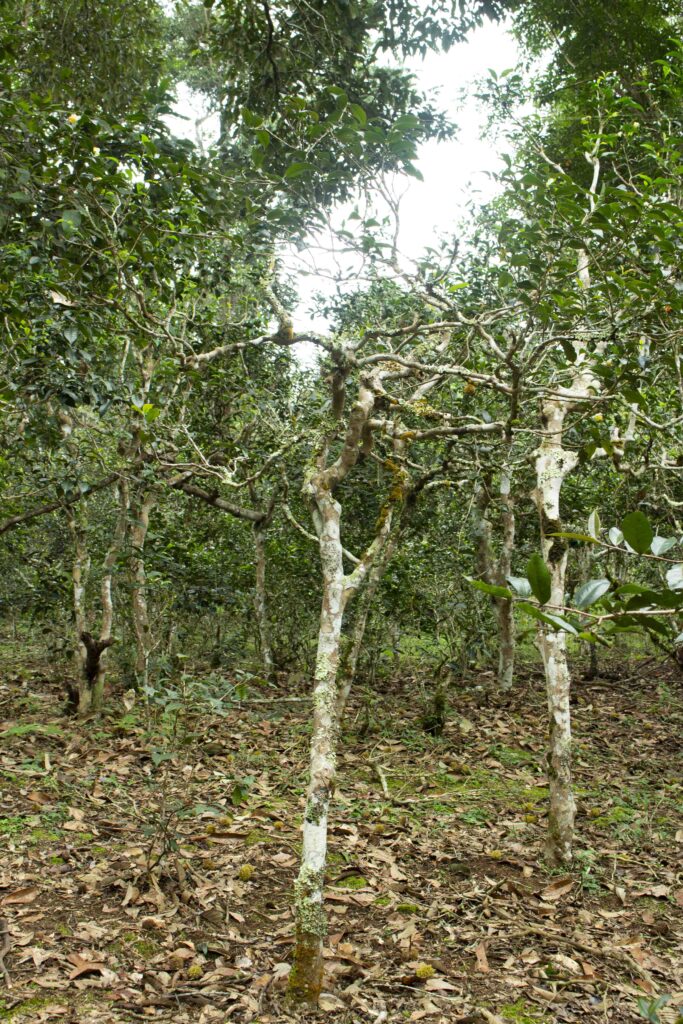
The ancient trees which our farmer’s use are a notable type of big-leaf tea ancient trees originating from Jingmai Mountain in Yunnan Province, China, producing some of China’s most prized Pu’er teas. This region is home to one of the world’s oldest and most well-preserved ancient tea forests, home to several trees at least 1000 years old.
With a history of tea cultivation dating back over 1,300 years. The indigenous Blang people, who have lived in this area for countless generations, are credited with pioneering the cultivation of tea trees.
The tea forests, including Dapingzhang Old Tea Forest of Jingmai Mountain are unique because they are not monoculture farms but rather a biodiverse ecosystem where tea trees grow alongside other plants and wildlife. This type of natural balance is where our Jingmai and Liubao tea trees are raised.
Growth Environment of Ancient Trees
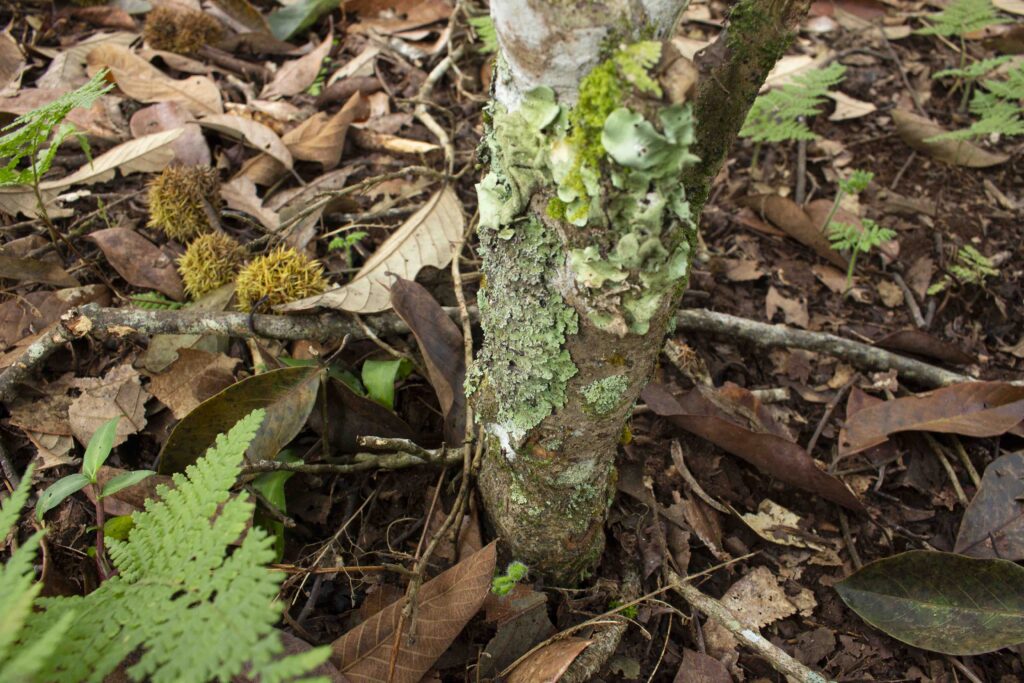
- Ancient trees are arbors that thrive in natural environments. They have a strong resistance to pests, a large shadow canopy, and bold main branches. The leaves are fewer in yield but highly resilient and rich in amino acids. These rare ancient trees are often individually harvested due to their age.
The mountain’s humid subtropical climate, regular mist, and fertile red soil create ideal conditions for slow, rich leaf growth.
Ancient tea trees grow intermixed with native forest species, forming a semi-wild agroforestry system requiring no chemical fertilizers to chase away pests.
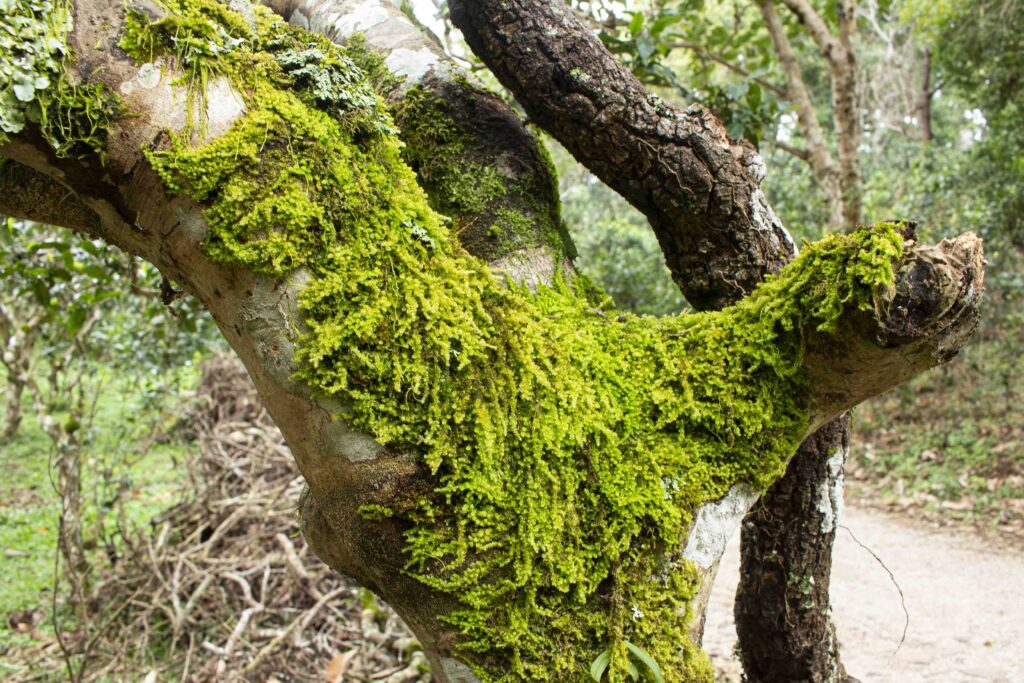
The trees are tall, deep-rooted, and naturally spaced (not plantation-style).
Leaves are thick, leathery, and rich in polyphenols and catechins due to long root systems and stable ecosystems.
The deep roots absorb minerals and micronutrients from several meters below the soil, giving the tea distinctive complexity and endurance.
Tea Liquor and Value of Ancient Trees
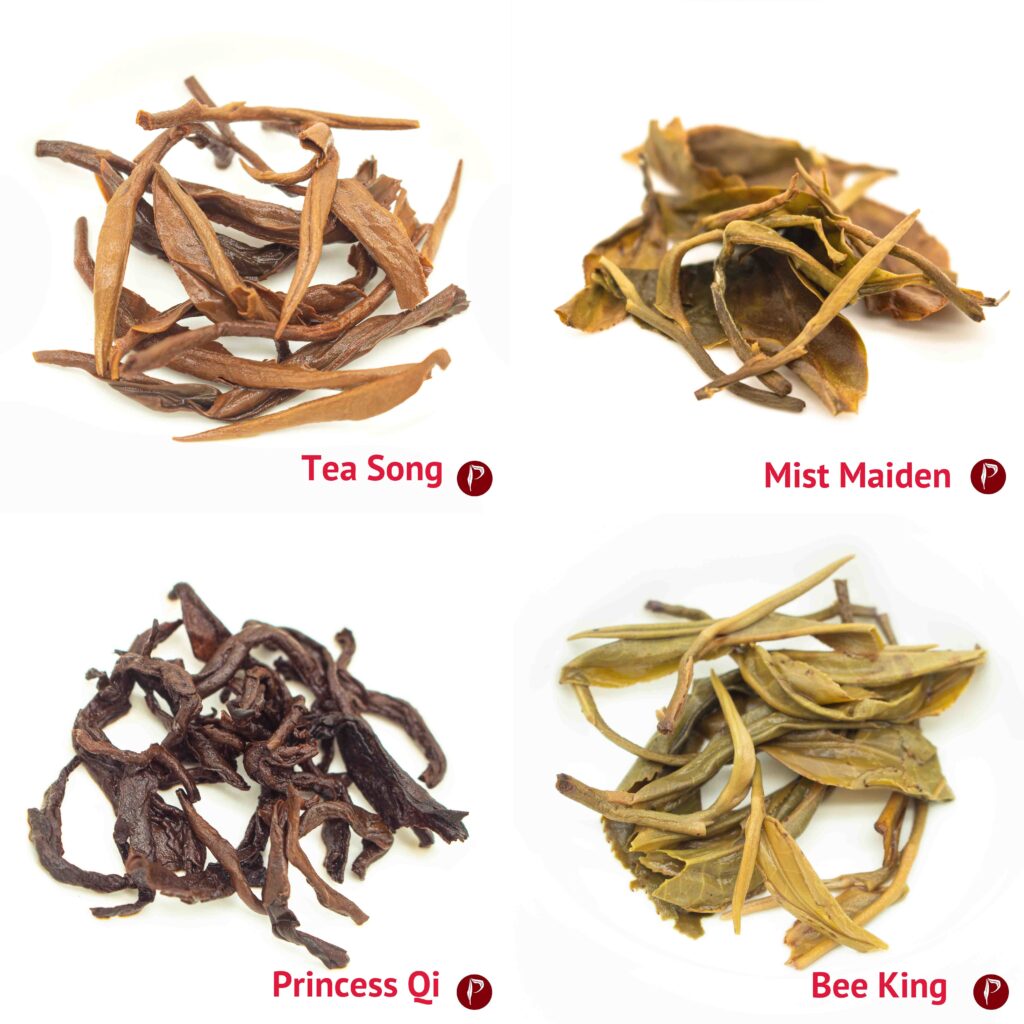
Liquor: Ancient trees tea is full-bodied, with a rich and layered taste. It offers an exceptional steeping endurance, typically lasting over 15 brews in a gaiwan lidded bowl.
Aroma: Fragrant and ethereal with floral, orchid-like, sometimes with wild honey or mountain forest notes.
Taste: Thick, smooth, and balanced with a long, evolving aftertaste (huigan).
Energy (“Cha Qi”): Described as powerful yet clean — a deep, calm brightness unique to ancient-tree teas.
Finish: Lingering throat sweetness (hui gan) and returning fragrance (hui wei).
- Rarity and Price: Due to the ancient trees tea rich nutrients, exceptional flavor, and limited production, ancient tree tea is the most prized tea. Factors like region, soil, tree age, and storage time significantly affect prices, ranging from 230 USD to 14,000 USD per kilogram during China’s spring season.
To explore more about the Jingmai Mountain Tea System——Jingmai Mountain Culture Brings the Spirit to Chinese Tea