
Discover the 6 Types of Chinese Tea: A Complete Guide
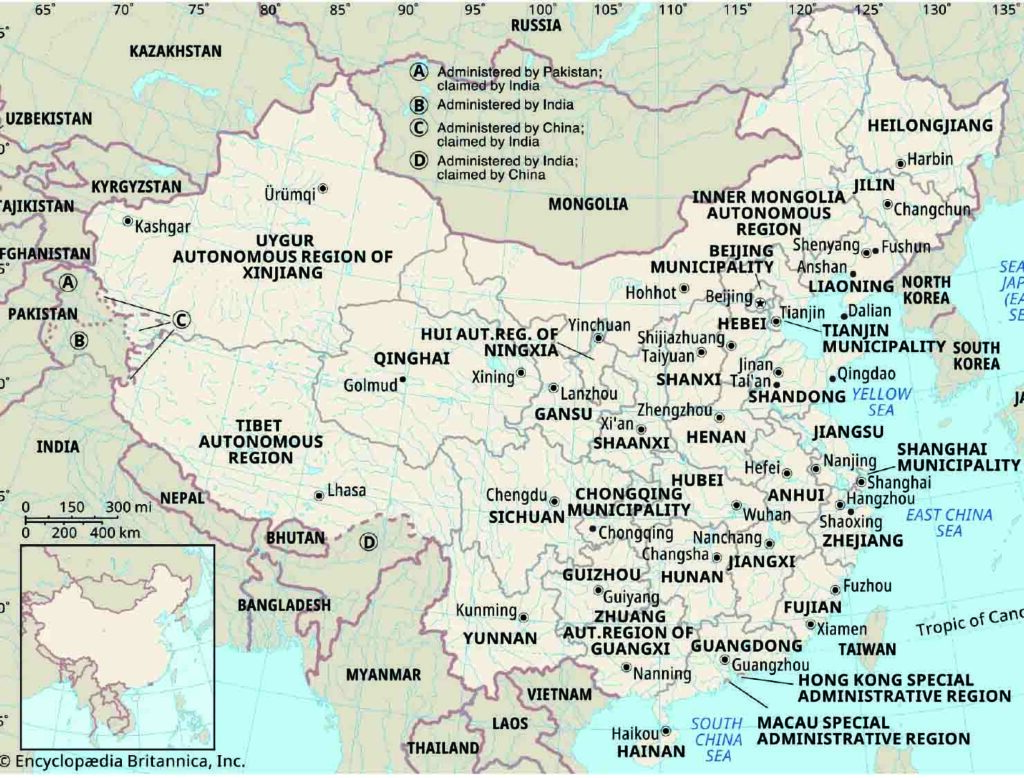
Chinese tea has a rich history dating back to the Paleolithic era. Over thousands of years, this cherished tradition has evolved into 6 types of Chinese tea: green tea, white tea, yellow tea, oolong tea, black tea, and dark tea. In this guide, we’ll dive into the production processes, origins, flavor profiles, and caffeine content of each type. And what about puerh tea? Read on to uncover its unique classification!
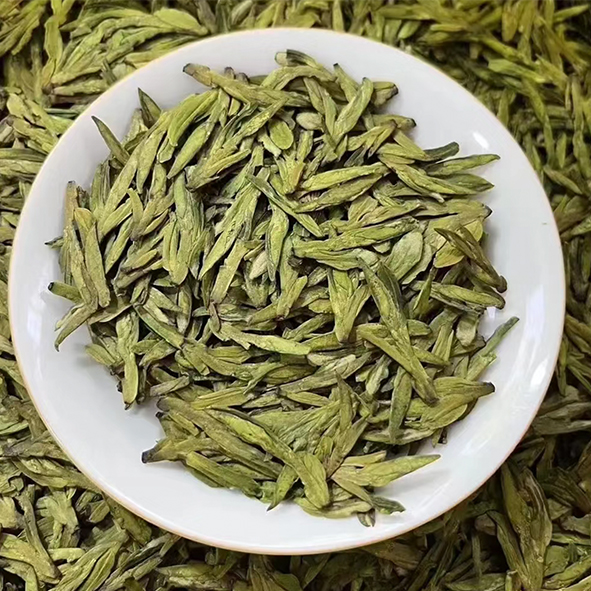
1. Green Tea
Green tea is one of the oldest and most popular of the 6 types of Chinese tea . Its non-fermented nature preserves the pure, original flavor of the tea leaves.
- Fermentation Level: 0%
- Production Process: Fixation → Rolling → Drying (Fixation Methods: steaming, pan-firing, baking, or sun-drying)
- Key Regions: Zhejiang (West Lake Longjing西湖龙井), Henan (Xinyang Maojian信阳毛尖), Anhui (Taiping Houkui太平猴魁), Yunnan (Raw Puerh Tea生普洱茶)
- Flavor Profile: Refreshing and aromatic, with a slightly bitter taste that transforms into a sweet aftertaste.
- Caffeine Content: High
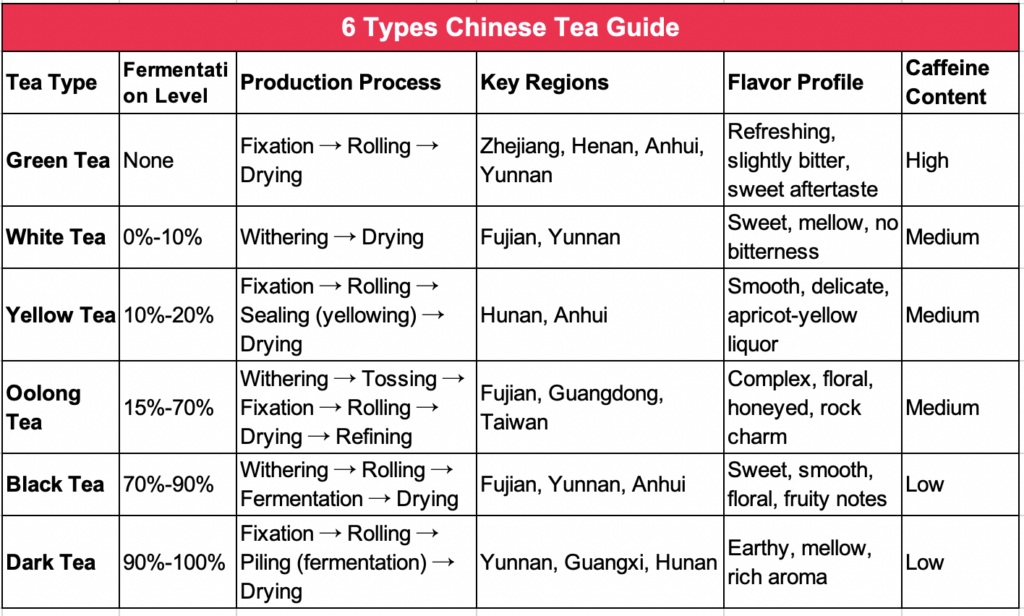
| Tea Type | Fermentation Level | Production Process | Key Regions | Flavor Profile | Caffeine Content |
| Green Tea | None | Fixation → Rolling → Drying | Zhejiang, Henan, Anhui, Yunnan | Refreshing, slightly bitter, sweet aftertaste | High |
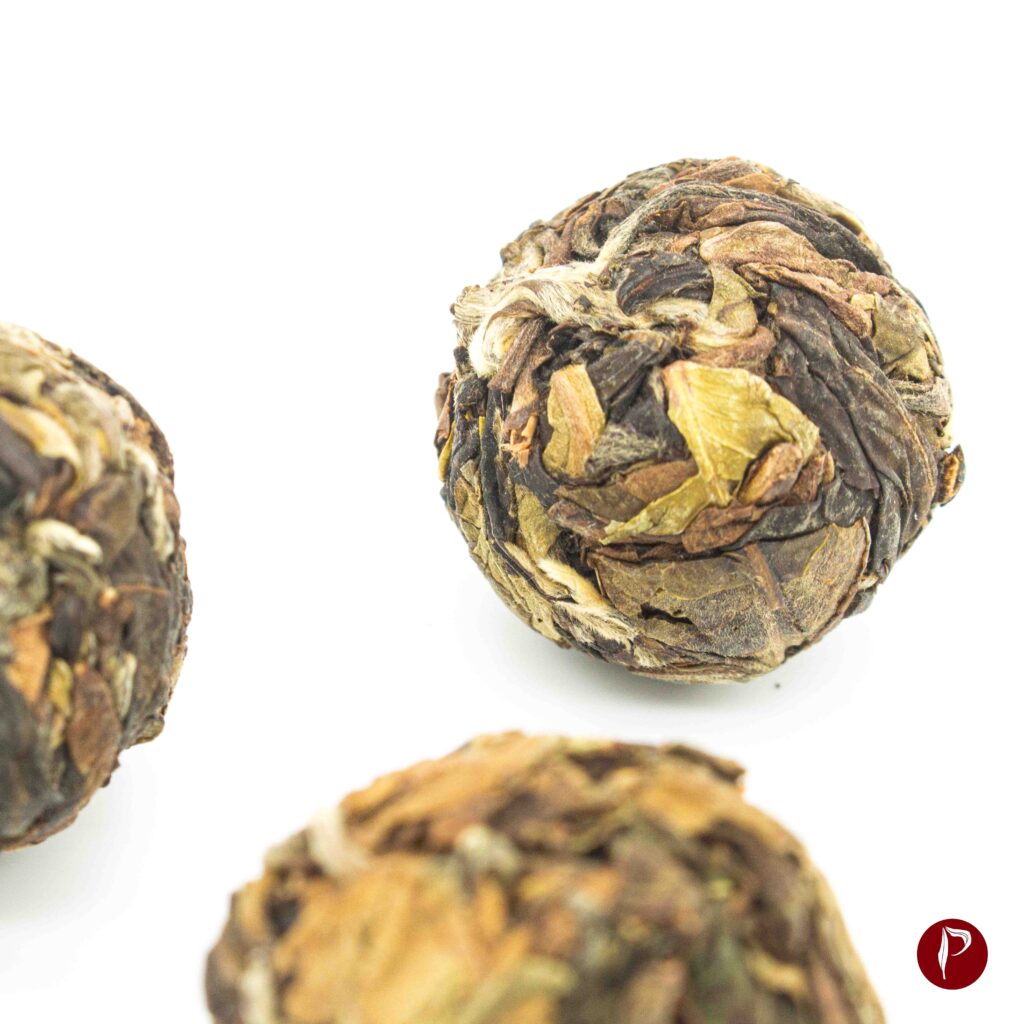
2. White Tea
Known for its minimal processing, white tea retains the natural sweetness and fragrance of the tea leaves. It’s like savoring sunshine in a cup. It’s one of the lightest, smoothest, and sweetest teas of the 6 types of Chinese tea.
- Fermentation Level: 0%-10%
- Production Process: Withering → Drying
- Key Regions: Fujian (Fuding White Tea福鼎白茶), Yunnan (Ancient Tree White Tea古树白茶)
- Flavor Profile: Sweet and mellow with no bitterness, offering a clear, slightly yellow tea liquor.
- Caffeine Content: Medium
- Classified(white tea from Fujian is categorized based on the picking standard): Silver Needle (tea buds), White Peony (one bud with 1-2 leaves), Gongmei (one bud with 2-3 leaves), and Shoumei (leaves without buds). Freshly produced white tea, when aged over time, transforms into aged white tea with a richer and more robust flavor.
| Tea Type | Fermentation Level | Production Process | Key Regions | Flavor Profile | Caffeine Content |
| White Tea | 0%-10% | Withering → Drying | Fujian, Yunnan | Sweet, mellow, no bitterness | Medium |
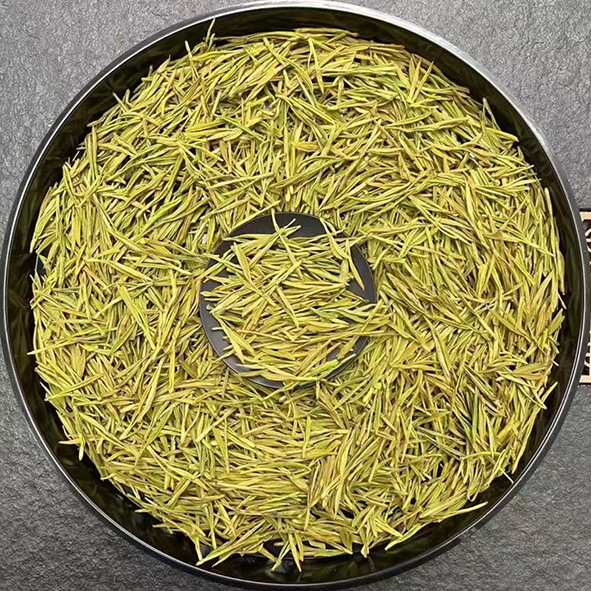
3. Yellow Tea
Yellow tea is the rarest of the 6 types of Chinese tea, made using a unique “yellowing” fermentation process in a humid environment.
- Fermentation Level: 10%-20%
- Production Process: Fixation → Rolling → Sealing (yellowing) → Drying
- Key Regions: Hunan (Junshan Silver Needle君山银针), Anhui (Huoshan Yellow Bud霍山黄芽)
- Flavor Profile: Smooth and delicate, with an apricot-yellow liquor.
- Caffeine Content: Medium
- Classified(based on the picking standard) :Yellow Bud Tea (buds or one bud with one leaf), Small Yellow Tea (one bud with 1-3 leaves), and Large Yellow Tea (one bud with multiple leaves).
| Tea Type | Fermentation Level | Production Process | Key Regions | Flavor Profile | Caffeine Content |
| Yellow Tea | 10%-20% | Fixation → Rolling → Sealing (yellowing) → Drying | Hunan, Anhui | Smooth, delicate, apricot-yellow liquor | Medium |
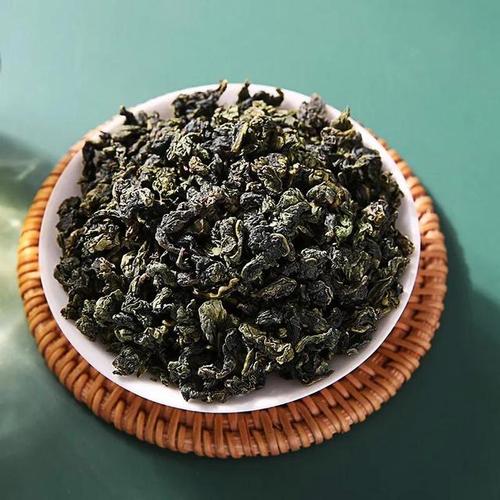
4. Oolong Tea (Wulong Tea)
Oolong tea, also called the ‘blue tea’ of the 6 types of Chinese tea, is celebrated for its diverse flavor profiles and enchanting aroma, thanks to its wide range of fermentation levels.
- Fermentation Level: 15%-70%
- Production Process: Withering → Tossing → Fixation → Rolling → Drying → Refining
- Key Regions: Fujian (Wuyi Rock Tea武夷岩茶), Guangdong (Phoenix Dancong凤凰单丛), Taiwan (Oriental Beauty东方美人)
- Flavor Profile: Rich and complex, with notes ranging from floral to honeyed. Common descriptors include rock charm, orchid fragrance, and honey aroma.
- Caffeine Content: Medium
| Tea Type | Fermentation Level | Production Process | Key Regions | Flavor Profile | Caffeine Content |
| Oolong Tea | 15%-70% | Withering → Tossing → Fixation → Rolling → Drying → Refining | Fujian, Guangdong, Taiwan | Complex, floral, honeyed, rock charm | Medium |
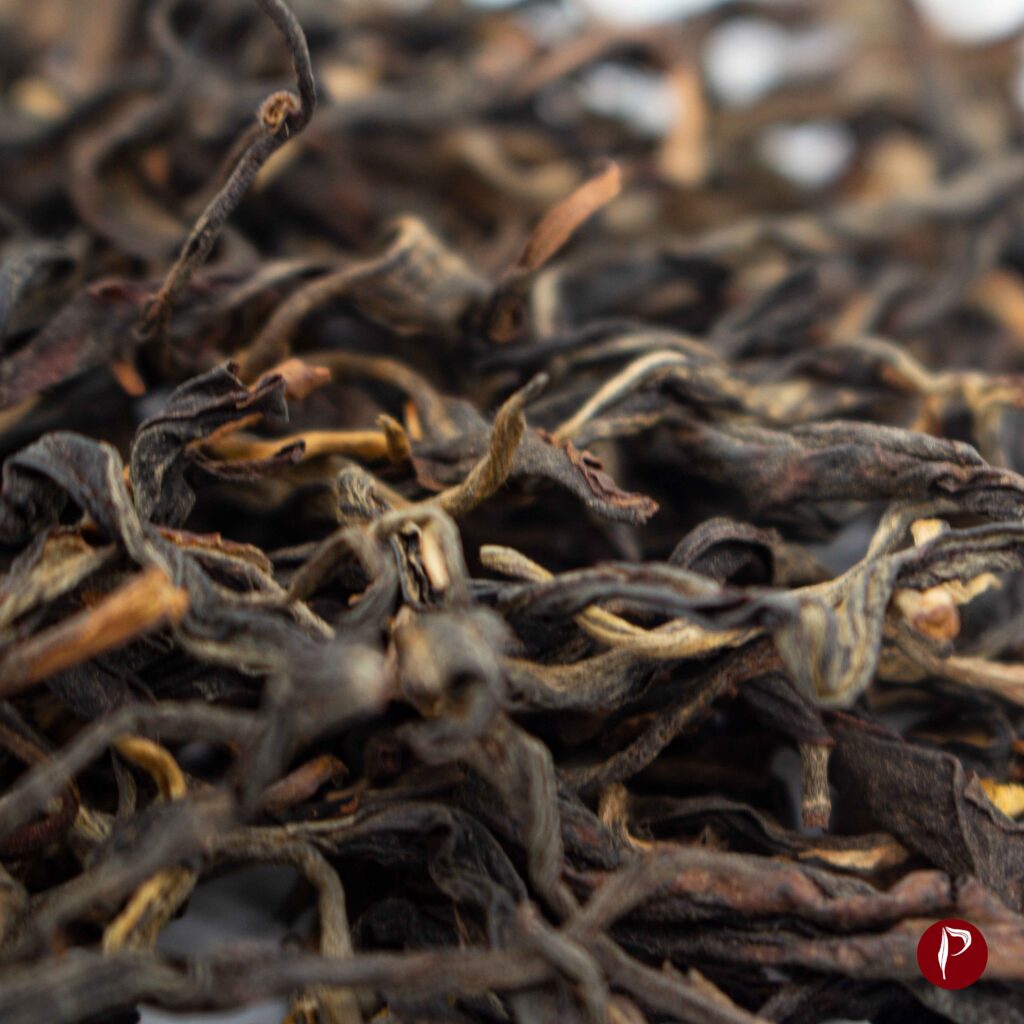
5. Black Tea (Hongcha)
Black tea originated in China during the Ming Dynasty, where it was first crafted in the Wuyi Mountains. Its full fermentation transforms tea polyphenols into theaflavins, giving it its characteristic red liquor. It remains the most popular tea in the west out of all 6 types of Chinese tea.
- Fermentation Level: 70%-90%
- Production Process: Withering → Rolling → Fermentation → Drying
- Key Regions: Fujian (Lapsang Souchong正山小种), Yunnan (Dianhong滇红/Sun-dried晒红), Anhui (Qimen Black Tea祁门红茶)
- Flavor Profile: Sweet and smooth, with floral and fruity notes and minimal bitterness.
- Caffeine Content: Low
| Tea Type | Fermentation Level | Production Process | Key Regions | Flavor Profile | Caffeine Content |
| Black Tea | 70%-90% | Withering → Rolling → Fermentation → Drying | Fujian, Yunnan, Anhui | Sweet, smooth, floral, fruity notes | Low |
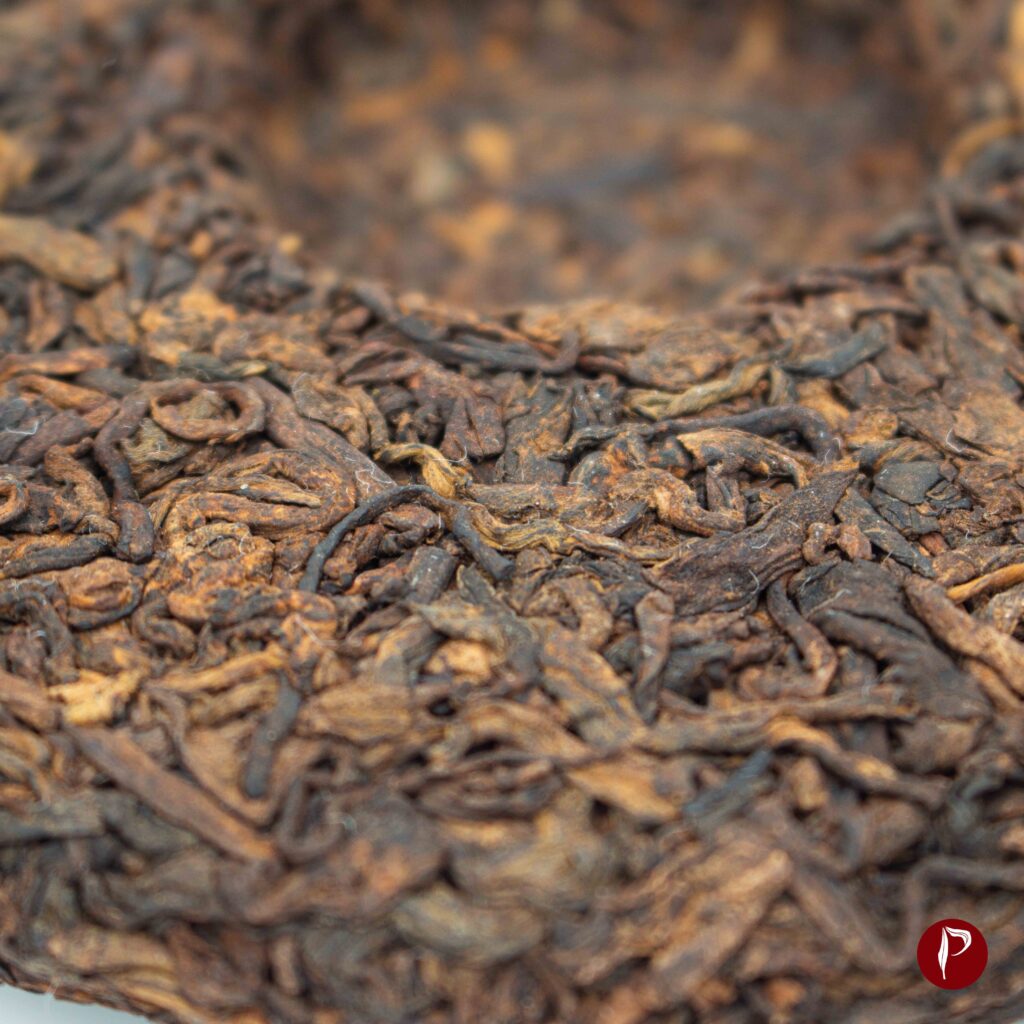
6. Dark Tea (Heicha)
Dark tea undergoes post-fermentation, often involving microbial fermentation during a prolonged aging process. Out of all 6 types of Chinese tea, this type has the lowest caffeine and tannin levels out of all teas. Also it is an excellent aid for digestion.
- Fermentation Level: 90%-100%
- Production Process: Fixation → Rolling → Piling (fermentation) → Rolling → Drying
- Key Regions: Yunnan (Ripe Puerh Tea熟普洱茶), Guangxi (Liubao Tea六堡茶), Hunan (Anhua Dark Tea安化黑茶)
- Flavor Profile: Earthy and mellow, with a rich, rustic aroma.
- Caffeine Content: Low
| Tea Type | Fermentation Level | Production Process | Key Regions | Flavor Profile | Caffeine Content |
| Dark Tea | 90%-100% | Fixation → Rolling → Piling (fermentation) → Drying | Yunnan, Guangxi, Hunan | Earthy, mellow, rich aroma | Low |
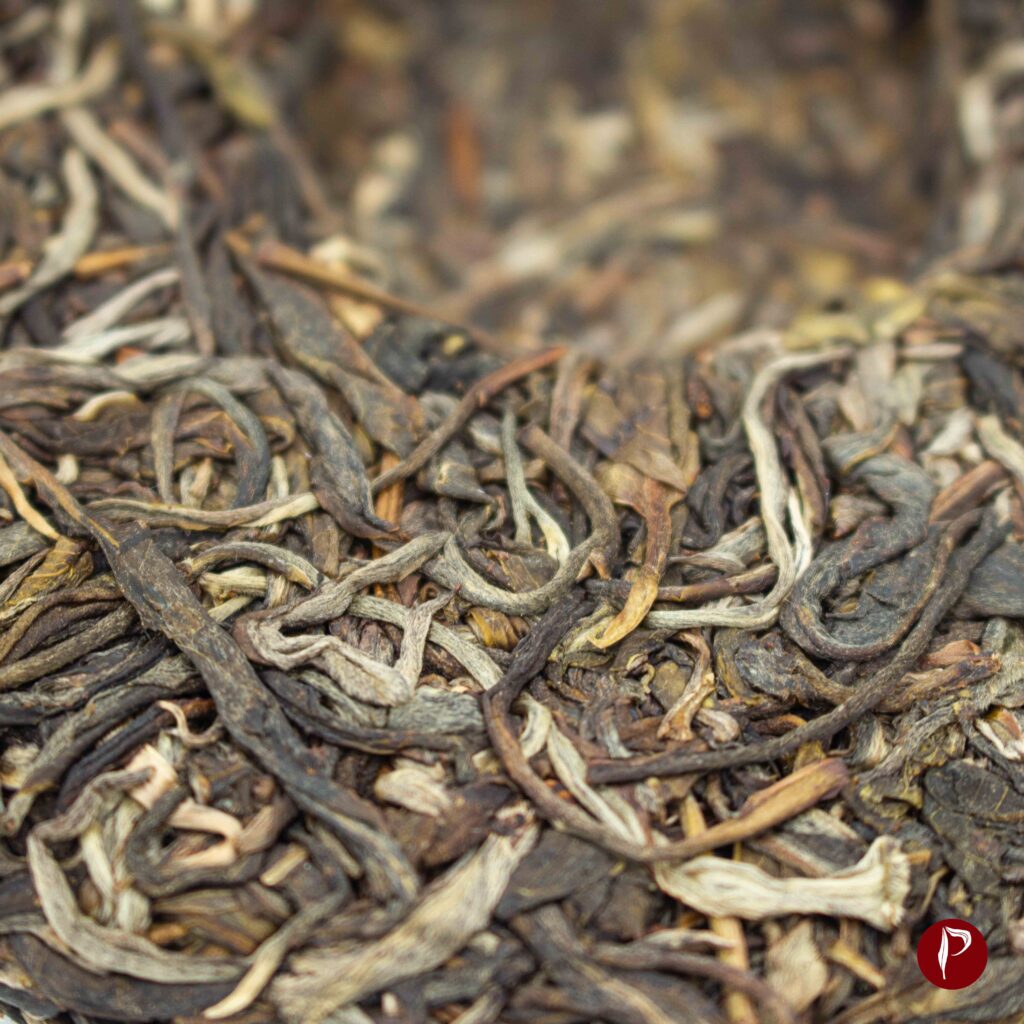
What About Puerh Tea?
Puerh tea, made from Yunnan’s large-leaf tea variety, is further divided into Raw Puerh and Ripe Puerh. What about puerh tea? Is puerh tea belongs to 6 types of Chinese tea? Sure! Ripe puerh is often classified under dark tea, while raw puerh is often classified as green.
- Raw Puerh: Falls under the green tea category due to its non-fermented production process. Raw puerh tea differs significantly from regular green tea. The flavor of regular green tea diminishes over time, so it is best consumed within a year. In contrast, raw puerh tea can undergo natural micro-fermentation over long-term storage under suitable conditions, which mellows its taste and gradually reduces its caffeine content.
- Ripe Puerh: Classified as dark tea because of its piling fermentation process. It is the most fermented tea out of all 6 types of Chinese tea.
To explore how to properly store puerh tea cakes, check out our blog on “5 Eco-Friendly Methods for Storing Tea”
To learn the difference of raw puerh and ripe puerh—-What is Ripe Puerh and Raw Puerh?
Final Thoughts
The 6 types of Chinese tea represent the diversity and artistry of tea culture. Whether you prefer the freshness of green tea, the sweetness of white tea, or the bold flavors of oolong or black tea, there’s a perfect cup waiting for you.
Ready to dive deeper into the world of 6 types of Chinese tea? Explore our selection of ancient puerh teas and black teas crafted by local artisans on Jingmai Mountain of Yunan China!
 Posted on Google
 D Richards
Trustindex verifies that the original source of the review is Google.
Love, love, love this new (to me)tea experience. I purchased the Sampler Box and with the helpful instructions I'm enjoying tea on a whole different level. All the subtle notes that I taste with the different teas reminds me of fine wine tastings. A truly enjoyable experience. I will continue supporting this business.Posted on Google Joshua UkinskiGot a chance to meet with David and Sherry at the Indy Winter Farmers market and they are just lovely people who are passionate about bringing high quality Chinese tea to the US, which is a tough feat. There knowledgeable is show instantly and you can tell that quality is their priority. They answered all my questions and set me up with some of the most excellent tea ive ever had!Posted on Google
 Bradley RepassPurcraftea has a wonderful selection of curated loose leaf teas! Whether you’re new to tea or a connoisseur, they offer something for everyone. The Mist Maiden Ancient Arbor White Tea is sweet and delicate, while the Yao Dragon Dog Ancient Arbor Liubao Tea is smokey and mysterious! They educated me on raw versus ripe puerh tea. I look forward to exploring all their teas!Posted on Google
 William MantegnaBy far the highest quality tea I've ever had! These are the longest tea leaves I've ever seen, taking 5-10 seconds to steep, which you can do multiple times with the same leaves. I even cold brewed some tea with this, which came out on the sweeter side. While it does get maltier if you over-steep, the tea never got bitter, which was really cool.Posted on Google
 Kevin KolesariWould buy again! Purcraftea provides great tea with awesome sustainable recyclable packaging. My package came with onsite tracking that was helpful for its journey to me and it was packaged in a way that prevented any harm to the tea itself. Tea Song was a delicious Jingmai red tea that was malty and sweet. Princess Qi was a smooth and floral cocoa shou puer that was very easy to drink.Posted on Google
 Jen JenExtremely high quality product. I love the instructions and information added. It helps me make the perfect cup every time. This tea is incredible!Posted on Google
 Erica StewartI enjoyed the calming effects of the tea. You can get a few good batches of tea with very little leaf too!Posted on Google
 Nick BartonI bought the travel tea set and it's been a life saver! I travel a lot and the free tea you find in hotels just doesn't do it. The travel tea set allows me to take my own tea with me and enjoy it the way tea is supposed to be enjoyed! Its become an essential part of my travel kit.
About Us